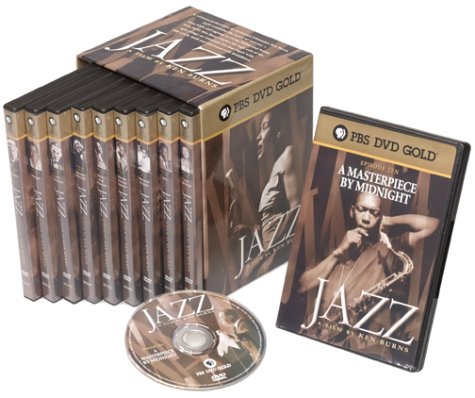
Review of the CDs and DVDs of the Ken Burn's Jazz TV series
Ken Burns’ Jazz documentary series (10-DVD box-set: Amazon.com; 4-DVD-set: Amazon.de; Amazon.co.uk.) aired in the United States on PBS in January. Cosmopolis is based in Switzerland. Therefore, I had to wait for the 10 DVDs which I finished viewing yesterday. The 19 hours of images contain precious visual sources. Unfortunately, Burns himself has little knowledge about jazz. He relied on Gary Giddins, who has written the best biography on Louis Armstrong so far, on Matt Glaser and others, including the “tradionalist” trumpeter Wynton Marsalis. Therefore, it comes as no surprise that the collection concentrates on the development of jazz until the 1960s. Even the last DVD is largely dedicated to the 60s: After 68 minutes, Louis Armstrong dies (1971) and after 77 minutes, Duke Ellington passes away (1974). One has to wait over 86 minutes to see the first “young” musician being presented: Wynton Marsalis. Among the stars missing in his presentation one counts Bill Evans, Oscar Peterson (he is mentioned just once), Chick Corea, Pat Metheny and John Zorn, not to mention “younger talents”, in fact, today’s jazz stars, like Dave Douglas, Diana Krall, Lynne Arriale and Brad Mehldau. The influence of Latin music and musicians on jazz and Latin jazz as such are ignored.
Critics were not very kind with Ken Burns’ Jazz. But if one considers it an introduction into jazz for a wider audience, it is not that bad. Burns would have done better to entitle his series “Jazz until the 1960s”. Here and there are some rather basic comments. Wynton Marsalis is, of course, no jazz historian. Still, there are plenty of great images and sounds left.
The series largely concentrates on Louis Armstrong as well as on Duke Ellington, both present on most DVDs. Gary Giddins as well as the 100th birthday of Satchmo that we are going to celebrate in 2001 may be responsible for this. There are some far fetched comparisons with Armstrong who remains the key figure throughout Ken Burns Jazzeven in style developments where he had a minor impact or even no impact at all. Comments, especially by Wynton Marsalis, are sometimes more based on enthusiasm than on analysis.
The first DVD begins with a photo of New York and Louis Armstrong’s Stardust, the guiding theme throughout the series. Gary Giddins defines jazz as the individualistic art form: “It doesn’t matter how anybody else did it, this is the way I’m going to do it.” It all started in the melting pot of New Orleans. The sources of jazz lie in marching bands, Ragtime, Blues, where each performer is expected to tell a story and in Creole bands. Buddy Bolden is presented as the first personality in jazz – others are left out. Burns rightly presents Jelly Roll Morton as the man who falsely claimed that he invented jazz, but, according to the film, he was the first to have transcribed the music. The first jazz recording was made in 1915. The first success came in 1917 with a title released by the Victor record company. The first DVD ends with the arrest of the eleven year old “Little Louis” for firing his stepfather’s revolver in the air.
The second DVD begins with Louis Armstrong’s I Cover The Waterfront. It is dedicated to the beginning jazz craze which swept from New Orleans to Chicago and New York. In comparison with the first part, where Burns largely relied on photographs because nothing else is available, moving images of jazz performances are presented. The history of jazz is strongly related to the history of African Americans, a connection that Burns stresses throughout the whole series. With Louis Armstrong, jazz becomes an art form. The recording of Chimes Blues is Armstrong’s first solo performance. One can hear the future of jazz in that record, a future, which began two years later with more recordings by Armstrong. Paul Whiteman and his society dance music and George Gershwin’s Rhapsody in Blue (1924) are other landmarks of the second part.
The third DVD begins with the Blues recordings by Bessie Smith (1923). Bix Beiderbecke is introduced as the first outstanding White jazz musician. In a still segregated world, he became a tragic figure and died before the age of 29. The African American Sydney Bechet was the first great saxophone player and the White Jewish Benny Goodman made jazz a popular music genre in America. The jazz singer Ethel Waters and images of Harlem’s Cotton Club where Duke Ellington’s “jungle music” reigned are other highlights. Images from Ellington’s Black and Tan movie are presented as well. Generally speaking, one whished for more and longer moving pictures from artists performing live.
The fourth DVD begins with Creole Love Call and Poor Man’s Blues and introduces the viewers to the jazz scene after the 1929 stock market crash which also affected the music business. Record companies and musicians experienced some hard times. After the instrumental music, Louis Armstrong was to revolutionize jazz singing too. Fats Waller performs The Joint is Jumpin’. Fletcher Henderson and his Big Band, Coleman Hawkins, Ellington, Goodman and the Swing Era are other strong points of this episode. In New York, the Roseland and Savoy Ballrooms were the centers of Swing. 1930 was at the same time a period in which musicians like Sydney Bechet temporarily – others even permanently – had to look for a job in the non-music world. The last pearl of the episode is Art Tatum playing Tiny’s Exercise.
The fifth DVD is still dedicated to Swing – jazz as dance music. With Benny Goodman, jazz becomes the American popular music. His version of Sing Sing Sing is a delight. Ellington, Armstrong, Jimmy Lunceford and his song Nagasaki, Tommy Dorsey and his orchestra, including the young Frank Sinatra as well as Artie Shaw with Begin the Beguine are at the center of attention. Lionel Hampton brings the vibraphone to the forefront of jazz. Last but by far not least comes Billie Holiday and her performances of A Fine Romance and Pennies from Heaven. Burns gives us basic biographical and artistic information on all artists.
On the sixth DVD, we are still in the Swing era, in the time of the so-called “Roosevelt Recession”. Coleman Hawkings makes the saxophone popular in jazz, Lester Young creates a “round, almost hollow sound” as one can hear on Lester Leaps In. It is the time of the Kansas City Jazz where musicians like Count Basie, Mary Lou Williams, Lester Young and others shine. Count Basie’s rhythm section is considered the greatest in the history of jazz. Mary Lou Williams worked as a pianist and arranger for Andy Kirk. Soon, she began writing for Armstrong, Ellington and others. Count Basie, Lester Young and Billie Holiday played together. 1938 was the year of Jazz at Carnegie Hall where Benny Goodman and Gene Krupa brought jazz into the temple of classical music. Their performance of Sing Sing Sing can be heard. Later that evening, the bands of Chick Webb and Count Basie moved to the Savoy where they engaged in a competition to determine the hottest band in town. It was the time in which African-American guitarist Charlie Christian brought the Kansas City sound into Benny Goodman’s band and Ella Fitzgerald won the first prize at the amateur night at the Apollo Competition (1939). Later, she joined the orchestra of Chick Webb. A-Tisket A-Tasket by “the first Lady of Swing” remained at the top of the charts for 17 weeks. Chick Webb died in 1939 at the age of only 30 from the tuberculosis which he had suffered from since childhood. The highlight of the episode is Billie Holiday’s protest song against “Negro lynching”, Strange Fruit, performed together with Artie Shaw. There are no moving images of the performance, but some striking ones showing tortured, lynched and burnt corpses of African-Americans. Ellington’s European tour on which, for the first time, he felt accepted as an artist and Coleman Hawkings’ recordings, including Body and Soul, complete this part.
The seventh DVD is dedicated to the birth of Bebop. In 1939, Charlie Parker played at Wall’s Chili House in New York where he first made the step towards Bebop. Bird Gets The Worm is the record played to the images. Parker returned to Kansas City where he stunned Jay McShann and his band with his new tunes. The story of Bebop went on later in New York with Dizzy Gillespie and Charlie Parker Minton’s Playhouse where, on Monday night, jam sessions were organized and musicians were offered free food and drink for their performances. Thelonious Monk, Jimmy Cobb, Coleman Hawkings, Mary Lou Williams, Lester Young and Roy Eldridge are other names associated with this legendary club. Because of a two year strike by musicians against record companies, Bebop was only revealed to the world through records and radio transmissions two years later. In 1941, the All Black Musical Jump for Joy was presented in Hollywood to honor the African-Americans’ contribution to America’s music. Jazz is also presented as the spirit of freedom during the Second World War. Benny Goodman and Glenn Miller, who died in a plane crash, are two key names associated with this period. Still, racism was not overcome yet. Billy Strayhorn wrote Take the “A” Train for Duke Ellington. Billie Holiday with Solitude, Armstrong, Dave Brubeck and Django Reinhardt, a guitarist with “Gypsy” blood, are other stars presented. Reinhardt and Stéphane Grappelli, who founded the quintet of the Hot Club de France, are – as far as I remember – the only non-American musicians presented by Burns in his whole jazz series.
The eighth DVD is dedicated to jazz after World War II. It begins with Bebop and Dizzy Gillespie’s Salt Peanuts and Charlie Parker’s Dexterity. African-Americans returning from war were disappointed when they found that racism still hadn’t been eradicated in the US. New dancing music, with Frank Sinatra as a striking example, was emerging. At the same time, a lot of jazz musicians were addicted to drugs, among them Charlie Parker, Coleman Hawkings, Kenny Clarke and Thelonious Monk. These factors gave jazz musicians a hard time. To the sounds of Parker performing Lover Man and Gillespie doing Manteca, one learns that Dizzy was the man who brought the new jazz sound to the people and became “the public face of Bebop”. Miles Davis, Jackie McLean and other younger musicians took up bebop and wanted to sound just like Charlie Parker. Louis Armstrong is at the focus of a concert in New York’s Townhall where Blacks and Whites (like Jack Teagarden) were playing together, something still unusual in America. The concert was such a triumph that it led to the formation of Armstrong’s All Stars who toured for the next 25 years. Armstrong’s return to New Orleans was less pleasant because the city still insisted on a segregated band. Satchmo was deeply hurt and that’s why, until today, he is not buried in his hometown. Burns then focuses again on the drug addiction of musicians like Art Blakey, Gerry Mulligan, Anita O’Day, Dexter Gordon, Sonny Rollins, Chet Baker and others. Almost the entire Bebop generation depended on heroin and/or alcohol. After this sad news, the broadcast of Hot House with Charlie Parker and Dizzy Gillespie is another highlight of the DVD. Bud Powell plays Get Happy and Ella Fitzgerald, who embraced Bebop too and managed to sing it, something believed impossible before, demonstrates her abilities performing Lady Be Good. The Modern Jazz Quartet, once more Louis Armstrong and Thelonious Monk, playing Blue Monk, are other strong moments of the era presented. The final highlight is Dave Brubeck’s Take Five from the album Time Out, a performance banned on film. The album sold over one million copies, more than any previous jazz album. Brubeck was even featured on the cover of Time magazine.
The ninth DVD begins with John Coltrane’s composition Giant Steps. West Coast Cool and young musicians who wanted to go beyond Bebop are presented. In 1955, Ray Charles’ I Got a Woman started the period of soul music. Then came Elvis Presley and jazz was never again at the center of popular music. Sonny Rollins, Duke again, Miles Davis, Clifford Brown, a clean musician who tragically died in a car accident, Sarah Vaughan, Satchmo once more, Art Blakey and Horace Silver with their Hard Bop Jazz Messengers are presented. The highlight of this segment comes from the CBS live program “The Sound of Jazz” with Billie Holiday performing Fine and Mellow, accompanied by Lester Young and Ben Webster. Cannonball Adderly and Bill Evans are other stars presented. Last but not least comes Miles Davis’ Kind of Blue, the best selling jazz album of all time. The treatment of John Coltrane and Ornette Coleman and his free jazz adventure is very basic.
The tenth DVD starts off with bebop tenor saxophonist Dexter Gordon performing Tanya, written by Donald Byrd. Like others, Gordon went to Europe in 1962 in search of a new jazz audience, since the one in the US was declining. The comment on this period: Jazz would become a tower of Babel, bitterly divided into schools. Would the most American art form survive? Burns once again shows images of Ellington and Armstrong, who had a major success with Hello, Dolly! At the same time, the Beatlemania was hitting the US. The situation of African-Americans is once more analyzed, Martin Luther King is one of the key figures in this context. The 1960s were also the time of bassist Charles Mingus, playing Take The “A” Train in Ken Burns’ film. Archie Shepp, Cecil Taylor, the Bossa Nova Craze and, once more, Ellington are mentioned. John Coltrane recorded A Love Supreme (1964), one of the major albums of the decade. He can be heard and seen performing Acknowledgement from it. At the Newport Jazz Festival, Miles Davis watched Sly and the Family Stone play and that changed him forever. The 43-year old musician began to look out for a pop and rock crowd. He switched to electronic instruments and started Fusion. Bitches Brew is presented as an example of Jazz-Rock. Then, Burns turns again to Armstrong and Stardust, the music which “makes us happy”. He concentrates on the deaths of Satchmo and Duke, then moves to Dexter Gordon who returned to New York and finally, after 86 minutes, turns to Wynton Marsalis, born in 1961. Marsalis became a bandleader at 21. His first record sold over 100,000 copies, an incredible achievement in the 1980s. He brought back acoustic jazz. In 1992, he became the artistic director of Jazz at the Lincoln Center and, in 1997, the first jazz composer to win a Pulitzer Prize in Music. In the last half an hour of the DVD, Burns presents – or rather drops the names of – Christian McBride, Steve Coleman, Cassandra Wilson, Diane Reeves and others. In the end, Nicholas Payton plays Wild Man Blues, a tribute to Louis Armstrong.
If one considers the 10 DVD-set a story of jazz until the 1960s, Ken Burns has delivered a valuable introduction. With 75 interviews, over 500 pieces of music, 2400 film stills and over 2000 archive film clips, the 19-hour epic is not that bad. But already in the 1960s, the account is too sketchy. Regarding the last 30 years of jazz presented in half and hour, one must say that it is simply a joke. The CDs which accompany the film contain valuable music – a series not to miss. All the 22 CDs honor famous individual artists, a delight form beginning to the end. The musical highlights from the film can all be heard, together with other major recordings by the different musicians. Of course, one can always argue about missing artists such as Fats Waller, Art Tatum, Cab Calloway, Glenn Miller and Anita O’Day, who is in the film only once mentioned as one of the many drug addicts among the jazz stars. Ken Burns Jazz can only further increase the interest in jazz which has already grown in recent years. It is only a pity – or better a shame – that Burns missed the historic chance to give today’s musicians a helping hand by introducing them to a wider audience. – Jazz sheet music.
Ken Burns: Jazz, 2000. 10-DVD box-set. Get it from Amazon.com. 4-DVD-set from Amazon.de and Amazon.co.uk.
Ken Burns: Jazz: The Story of America’s Music.
5 CDs. Get them from:
– Amazon.co.uk
– Amazon.de
– Amazon.com
– Amazon.fr

Geoffrey C. Ward, Ken Burns:
Jazz: The Story of America’s Music.
Hardcover, Knopf, 512 p.,
November 2000. Get the book from:
– Amazon.com
– Amazon.fr
– Amazon.co.uk
– Amazon.de
Some of the 22 CDs dedicated to individual artists:
Ken Burns: Louis Armstrong. Sheet music by Louis Armstrong.
Features Stardust, the guiding
theme throughout the PBS series.
Get it from Amazon.com

Ken Burns: Duke Ellington.
Includes Solitude and
Take The “A” Train, both
featured in the PBS film.
Get it from Amazon.com
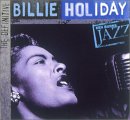
Ken Burns: Billie Holiday.
Includes Strange Fruit,
Solitude and Fine and Mellow,
all highlights from Burns’ film.
A must. Get it from:
– Amazon.com
– Amazon.de
– Amazon.fr
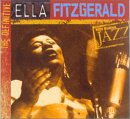
Ken Burns: Ella Fitzgarld.
With A-Tisket A Tasket also
sung in Ken Burns’ Jazz.
Get it from:
– Amazon.com
– Amazon.de
– Amazon.fr
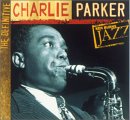
Ken Burns: Charlie Parker.
With Salt Peanuts, Ko-Ko
and Lover Man from the film.
Get it from:
– Amazon.com
– Amazon.de
– Amazon.fr
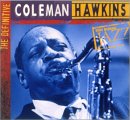
Ken Burns: Coleman Hawkins.
Get it from:
– Amazon.com
– Amazon.de
– Amazon.fr
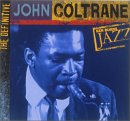
Ken Burns: John Coltrane.
Includes ‘Round Midnight,
Acknowledgement and
Jupiter.
Get it from:
– Amazon.com
– Amazon.de

Ken Burns: Thelonious Monk.
Includes Blue Monk presented
in Burns’ Jazz.
Get it from Amazon.com
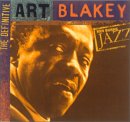
Ken Burns: Art Blakey. Sheet music by Art Blakey.
Includes A Night in Tunisia.
Get it from:
– Amazon.com
– Amazon.de
– Amazon.fr
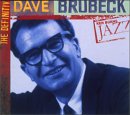
Ken Burns: Dave Brubeck.
It includes of course the famous
Take Five. Get it from Amazon.com
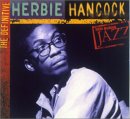
Ken Burns: Herbie Hancock. Sheet music by Herbie Hancock.
One of the many stars “forgotten”
in Burns’ film; at least present on CD.
Get it from:
– Amazon.com
– Amazon.fr


