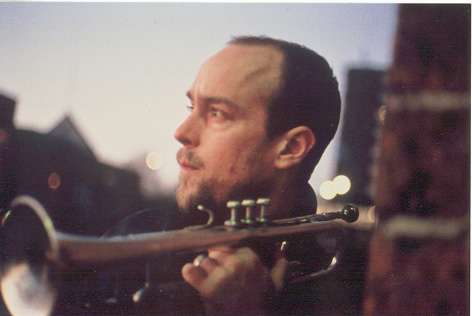
Dave Douglas on trumpet, Brad Shepik on guitar and Jim Black on drums. Concert review: Alte Kaserne, Winterthur, Switzerland
History of Tiny Bell Trio
The Tiny Bell Trio with Dave Douglas on trumpet, Brad Shepik on guitar and Jim Black on drums is one of the rare truly innovative and exciting trios around. Founded in 1991 as a group who played in the Bell Café in Soho, New York City, its name reflects the fact that in the beginning they had to play in a tiny corner of the mentioned cafe, often ignored by the public who did not actively listen to them. The trio has gone a long way since their days as an obscure background ensemble in a cafe.
Formed soon after the arrival of Shepik and Black in New York, the trio’s repertoire is largely influenced by traditional East European folk music that Douglas has explored with accordionist Nabila Schwab before. Their first CD, released in 1994, was simply entitled The Tiny Bell Trio. The same year, the trio went on their first European tour. The following year, their second album, Constellations, was released. To promote it, they toured North America as well as Europe. Besides European folk music, especially from the Balkans, the trio also began to include other musical influences into their sound, ranging from classical composer Robert Schumann to George Brassens and Herbie Nichols.
In 1997 followed the album Live in Europe, which is a mix of Serbian, Macedonian, Hungarian, Bulgarian, Klezmer, classical and jazz influences. Their original blend of “Balkan fusion” is always full of humor. The album is the best account available of the trio’s live performances. Of course, if you have the chance to see the trio in the flesh, don’t miss it. Nothing can beat the real thing, a live performance. The latest release of The Tiny Bell Trio is 1999s Songs of Wandering Souls.
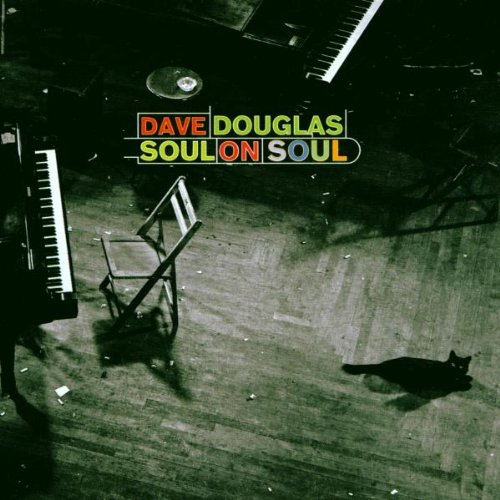
Dave Douglas: Soul on Soul, 2000. Order the CD from Amazon.com, Amazon.co.uk.
Biography of Dave Douglas
For the biography of trumpeter and composer Dave Douglas, born in Montclair, New Jersey, in 1963, as well as CD and concert reviews with some of his other groups, check the following articles: Dave Douglas’ Sextet and Dave Douglas’ Charms of The Night Sky. In autumn 2001, Dave Douglas is to release a CD recorded with Tom Waits and a bigger ensemble.
Guitarist and composer Brad Shepik was born in Walla Walla, WA, in 1966, and raised in Seattle. He moved to New York City in 1990 where, a year later, he became a member of the Tiny Bell Trio. He leads his own quintet, the Commuters, featuring Peter Epstein (saxophones), Skuli Sverisson (bass), Mike Sarin (drums) and Seido Salifoski (dumbek and percussion). Their first CD is entitled The Loan. Shepik is also a regular member of Pachora, Babkas, the Paradox Trio and the acoustic trio Tridruga. He has also worked and/or recorded with Paul Motion’s Electric Bebop Band, Carla Bley’s Escalator over the Hill, Charlie Haden’s Liberation Music Orchestra, Yuri Yunakov’s Bulgarian Wedding Band, Tim Berne, Steve Swallow, Kenny Werner, Julian Priester, Andy Laster, Jerry Granelli, Jay Clayton, Ken Schaphorst and Franz Kogelman.
Drummer Jim Black was born in 1967 and grew up in Seattle, WA. As a teenager, he played music ranging from garage rock to big band swing. In 1985, he was admitted to the prestigious Berklee College of Music in Boston, MA. Already as a student, he recorded albums, performed in Europe and taught summer classes at Berklee. In 1999, he moved to Brooklyn, NY, and soon afterwards became a member of the Tiny Bell Trio. Jim Black has also been touring and recording with Pachora, Human Feel, Tim Berne’s Bloodcount, the Ellery Eskelin Trio and Uri Caine’s Mahler Project. He leads his own quartet, Beat Table, featuring Skuli Sverrisson, DJ Olive and Ted Reichmann.
Concert review: The Tiny Bell Trio in concert at the Alte Kaserne in Winterthur, Switzerland, March 3, 2001
The Tiny Bell Trio’s concert in Winterthur was a superb demonstration of the fact that avant-garde music does not have to be boring or deadly serious. It was Dave Douglas’ third performance at the Alte Kaserne within a year. He had already convinced with two of his other groups, Dave Douglas’ Sextet and Dave Douglas’ Charms of The Night Sky(the 2000 Downbeat Critics’ Poll awarded them best album of the year for Soul on Soul; Dave Douglas was also named Trumpeter and Artist of the Year).
In its 10th-year of existence, the Tiny Bell Trio has definitively become a reference for creativity and pure joy of playing. As Dave Douglas confessed the Tiny Bell Trio has now a repertoire of some 100 pieces, more than half of which they can play anytime – and that’s what they are doing on their current concert tour. At the last moment, they decide on what to play.
Most of the compositions played in Winterthur can be found on the trio’s former CD releases, but a few new tunes were played as well. Impressive was the range of music Dave Douglas on trumpet, Brad Shepik on guitar and Jim Black on drums dwell on. Among the compositions very freely incorporated into their distinctive sound one finds the classical music of Robert Schumann, jazz tunes by Thelonious Monk, Roland Kirk and Wayne Shorter, European Klezmer and folk music from the Balkan, lullabies and film music.
After a wild and furious introduction, the second tune played by the Tiny Bell Trio was On Shot from the album Songs for Wandering Souls. Dave Douglas started off the elegiac ballad, soon afterwards joined by his sensitive partners. The Tiny Bell Trio is no one-man show which exclusively relies on Dave Douglas. Jim Black is an outstanding and much sought after drummer. He is no simple rhythm provider. Like Douglas, he is a virtuoso. He uses little bells, rattles, a violin bow and many indescribable instruments. Black continuously helps to break up established, well-known forms of music and transforms them into something new. The Tiny Bell Trio is an ensemble of constant, restless change. There is no standstill and no uninspired moment. Guitarist Brad Shepik was the most melodious and harmonic of the three musicians, playing a key role in holding his two more experimental friends and the trio together.
After the ballad followed a fast-paced jazzy tune with a roguish touch – present in all the twelve compositions, six played before and the other six performed after the break. Dave Douglas did not only blow the trumpet, he literarily spoke on it, whistled and gurgled and invented a lot of noises unheard before. At any moment, the trio was enjoying the concert, especially Jim Black with an ecstatic smile all over his face.
None of the compositions was a simple tune with one melody in one style, but all were complex arrangements with references, allusion and reminiscences to marching parades, Mardi Gras, free jazz, klezmer, Bulgarian and Hungarian tunes, to Miles Davis and children’s rooms. Melodramatic moments here and there were immediately transformed into fun and joy. At the end of the first part, in a composition previously recorded, the influence of Robert Schumann’s Fünf Stücke im Volkston op. 102, was feasible. A frenetic joyful tune with a stronger East European folk element.
The second part started off with Shepik’s guitar playing a blue tune with a Spanish touch. It was the first and only thoroughly serious moment of the evening. The second tune offered allusions to fanfares and solemn music, Klezmer and Balkan folk music. Impressive was the fact that there were no pauses between the highly complex compositions. The blind understanding of ten years of playing together paid off. The trio had just arrived from New York City, but at no moment did one get the impression of jet lag in the musicians playing.
In another tune, Dave Douglas blew all sorts of staccato sounds, accompanied by dark and melodramatic drumbeats by Jim Black, who created a gloomy atmosphere. This was the highlight at a concert entirely consisting of outstanding performances. It was followed by a joyful tune with beats like cracks of the whip by Jim Black, an orgiastic experience.
The penultimate compositions of the official program was Kurt Weill’s The Drowned Girl, in a version with the Tiny Bell Trio’s blend. Thanks to the public’s enthusiastic response, two encores followed later, Czardas from the album Live in Europe. It was to illustrate how rather naive and sometimes awkward the Tiny Bell Trio sounded at its obscure beginnings in Soho. The second encore was Thelonious Monk’s Ask My Know, introduced by Dave Douglas with the words: “But after this, please be merciful” – the trio started to pay tribute to the transatlantic travel. You thought jazz was dull, a thing of the past, a form of music that had become outdated? The Tiny Bell Trio is the most exciting live experience out there at the moment. Sheet music by Dave Douglas.
Photo of Dave Douglas. Photo provided by Jazz in Winterthur.
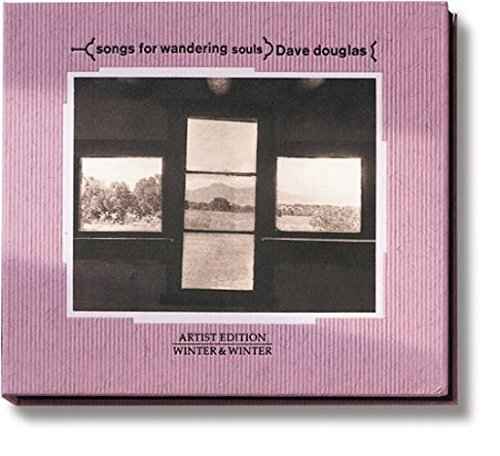
Tiny Bell Trio: Songs for Wandering Souls, 1999. Order it from Amazon.de, Amazon.com.
Tiny Bell Trio: Live in Europe, 1997. Get it from Amazon.de, Amazon.fr, Amazon.com.
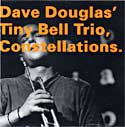
Tiny Bell Trio: Constellations, 1995. Recorded in 1995 at Swiss Radio DRS in Zurich. Get it from Amazon.fr, Amazon.co.uk. Sheet music by Dave Douglas.
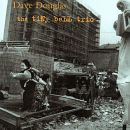
Tiny Bell Trio: The Tiny Bell Trio, 1994 (2000). Order it from Amazon.com, Amazon.co.uk.
Dave Douglas: Strange Liberation. Februar 2004. CD bestellen bei Amazon.com, Amazon.co.uk.
Dave Douglas: A Thousand Evenings. RCA Victor/BMG, Oktober 2000. Bestellen bei Amazon.de.
Dave Douglas: Soul on Soul. RCA Victor, Mai 2000. Bestellen bei Amazon.de.
Dave Douglas: Charms of the Night Sky. Winter & Winter, 1998. Bestellen bei Amazon.de.
Dave Douglas: Stargazer. Arabesque Records, 1997. CD bestellen bei Amazon.de, Amazon.com.


